
December Ice Mushroom
Whales and dolphins and “grolar” bears, oh my

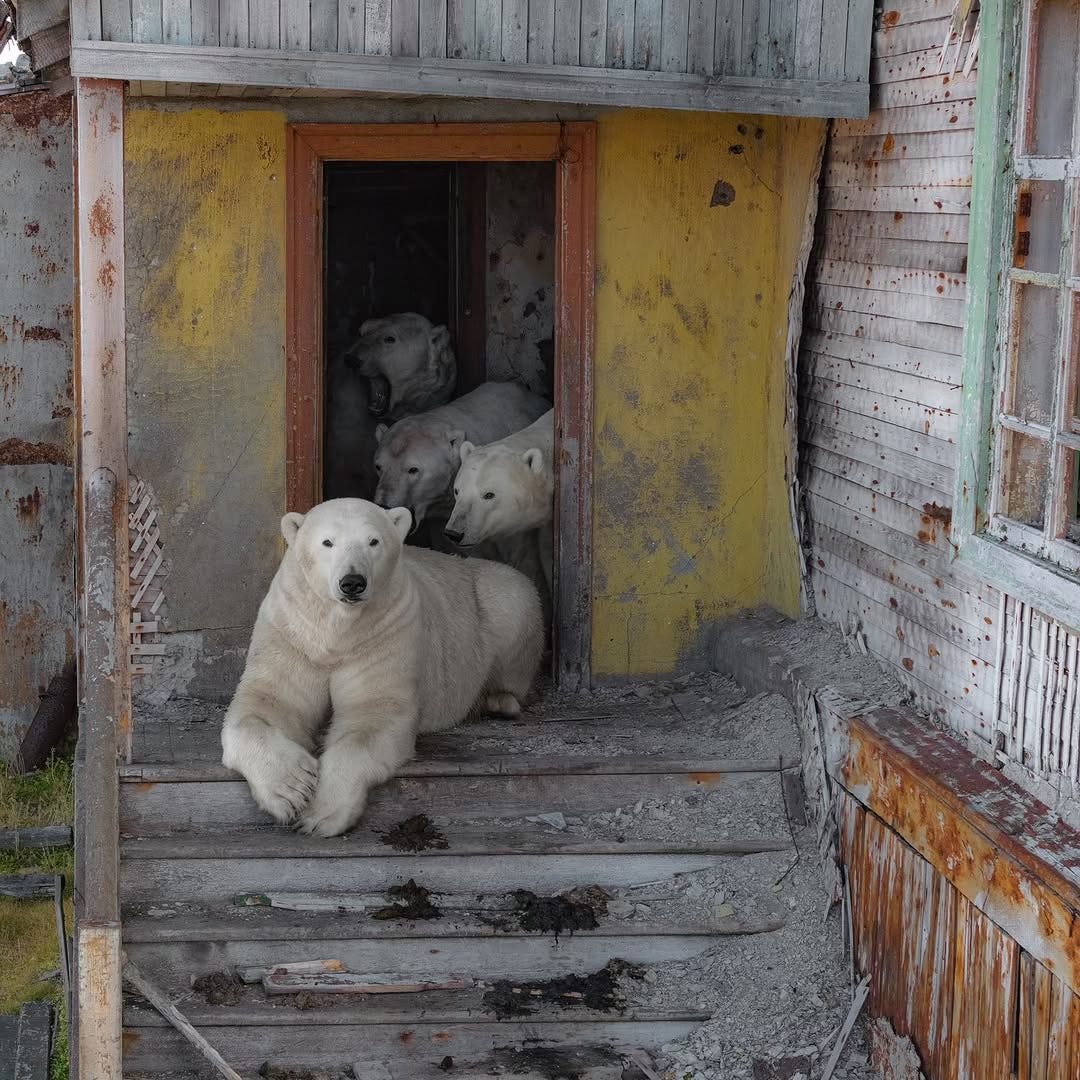
Polar bears on Russia’s Kolyuchin Island photographed via drone by Vadim Makhorov.
When I think of changing winters, the painting The Hunters in the Snow often comes to mind. One of a series meant to represent each season, the 1565 painting includes Dutch villagers skating, curling, riding sleds and playing “ice golf” on frozen ponds.
Ice skating is part of the national heritage in the Netherlands, the country with the most speed-skating Olympic medals. But the beloved “Eleven Cities Tour” skating race there hasn’t been held since 1997.
“In my youth we could go ice skating on the canals or on the lakes, and these things hardly happen any more,” Fonger Ypma of Arctic Reflections told me when I was working on a Scientific American feature about polar geoengineering. His efforts to artificially refreeze the Arctic were inspired by the “ice masters” who freeze Dutch skating rinks.
This year was the second hottest year on record, and winter is typically warming more than other seasons. The likelihood of a White Christmas—having at least 1 inch of snow on the ground at 6am on Christmas day—has been decreasing across much of the United States, including parts of my home state, Wisconsin. I remember snowmobiling with friends over the holidays. Now snowmobile trails are opening for just a few weeks or days, and races are often canceled.
Local culture is one of many things lost when winters warm, along with tourism dollars, human and animal health, infrastructure integrity and irrigation of crops. Snow stores water for the summer. In The Last Winter, Porter Fox described watching skiers carve down a strip of artificial snow on a green mountain in Italy.
“It was a sad scene: the grandeur of the Alps reduced to a carnival ride,” he wrote. “But it was more than that … Where will everyone go when the rivers dry up?”
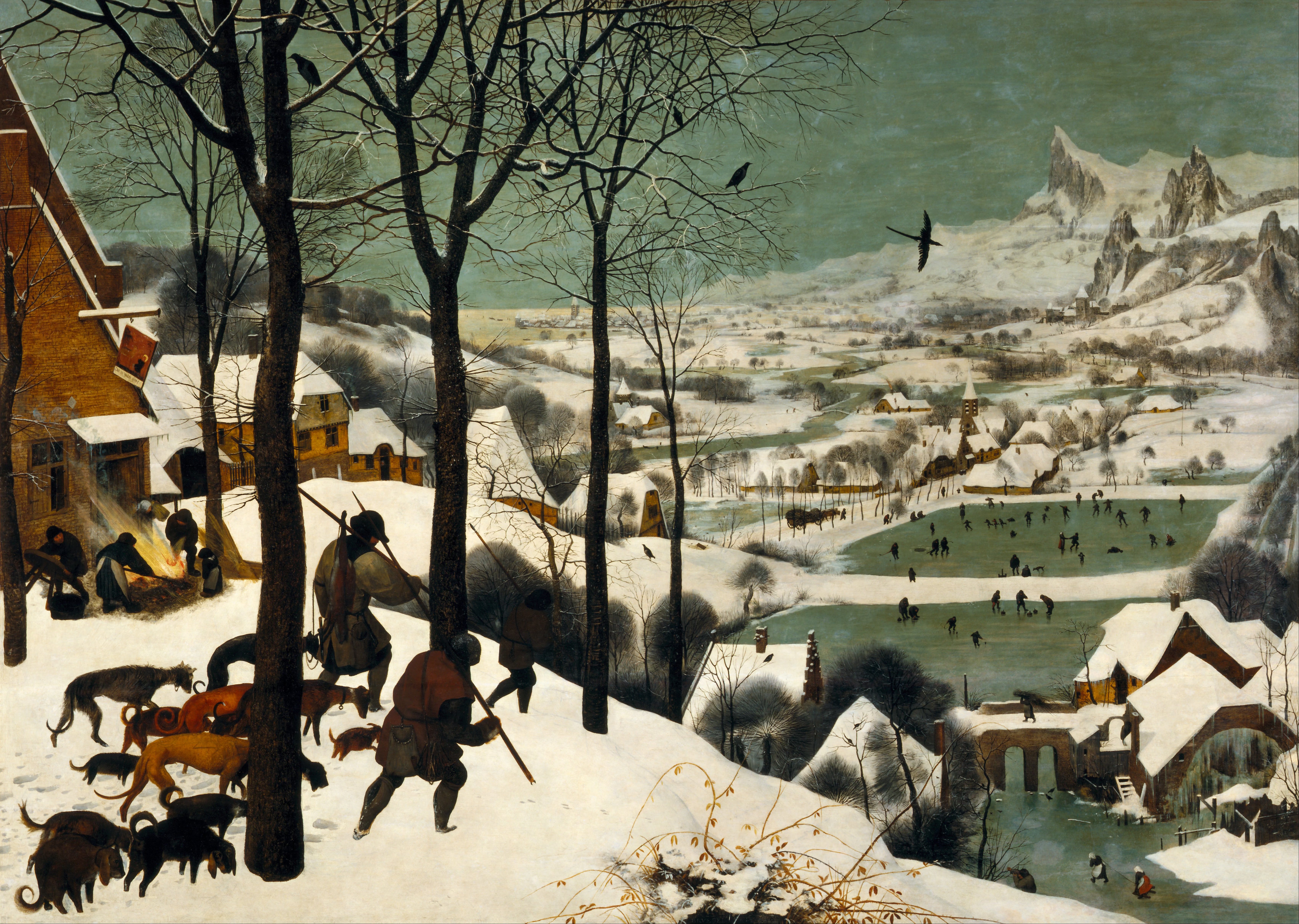
The Hunters in the Snow by Pieter Bruegel the Elder, with skating villagers in the background.
What I’ve been up to:
Closure of US institute will do immense harm to climate research
The Trump administration has said it will break up the renowned National Center for Atmospheric Research in Colorado, at least in part because of a beef with Governor Jared Polis. What could that actually mean for science? Well, it will likely end updates and maintenance of the “most-used (climate) model in the world,” for starters. Also, NCAR has two really cool airplanes.
The world will soon be losing 3000 glaciers every year
Currently we’re losing 1000 glaciers every year. That’s a crazy number, and it could triple by 2040. On our current trajectory of 2.7°C of warming, 79% of glaciers will disappear by 2100. If we limit that to 2°C, however, 63 per cent of glaciers will disappear.
How green hydrogen could power industries from steel-making to farming
A lot of politicians are touting clean hydrogen as the fuel of the future and counting on it to meet net zero goals. But if you’re thinking of making it big in clean hydrogen, probably don’t quit your day job, because its production may remain limited. Instead, we should narrow our focus to industries where clean hydrogen could have the biggest climate impact, researchers say.
Some Arctic warming ‘irreversible’ even if we cut atmospheric CO2
Removing carbon dioxide from the atmosphere with trees or machines is a growing necessity. But even if we were to remove all the excess CO2, the Arctic would remain about 1.5°C warmer than the preindustrial era, models show. That’s mainly because the ocean, which has absorbed 90% of warming from greenhouse gases, will hold onto that heat for thousands of years, melting sea ice and warming the Arctic air.
Killer whales and dolphins are ‘being friends’ to hunt salmon together
Killer whales are called that because they kill other cetaceans, including dolphins. But researchers who attached video cameras to killer whales off Vancouver Island found that they were working with white-sided dolphins to hunt salmon, in a rare example of inter-species cooperation. Could there be a more heartwarming story for the holidays? Unless of course the dolphins are just using the whales to hide from predators …
News from high altitudes and latitudes:
Twins’ Peaks: The Gilbertson Brothers Want to Rewrite Your Country’s Map
I remember reading in Robert MacFarlane’s Mountains of the Mind about how the British Great Trigonometrical Survey of India (under George Everest) built 60-foot towers of stone to estimate the heights of the off-limits mountains of Nepal with theodolites, trying to account for light refraction, pressure and temperature. Good thing we can know the heights of mountains more exactly these days. Or can we? This article by Sarah Scoles, my fellow Schmidt fellowship winner, looks at a pair of fraternal twins who are climbing high points with high-accuracy GPS units, and finding many that aren’t actually the highest.
Lovers and friends aren’t usually punished when someone dies on a mountain. But a hiker has been charged with manslaughter after leaving his girlfriend on Austrian peak, where she froze to death. He says he was trying to get help at a mountain hut. This man’s actions make me furious and seem reckless at best. But do they constitute manslaughter? The prosecution argues yes, because he was much more experienced and therefore was acting as a “responsible guide.”
Alaska’s $44 billion bet on natural gas
Besides the opening of the Arctic National Wildlife Refuge to drilling, Trump has another pointless fossil fuel megaproject in Alaska. He’s pushing a liquified natural gas pipeline that would run 800 miles from the top to the bottom of the state, skirting Denali National Park. It would cost $44 billion (analysts say $70 billion) but has no buyers, and oil majors are staying away. Alaska has already invested $600 million. Yet while it may not make much profit, this LNG would add at least 1.5 billion tons of CO2 emissions over the pipeline’s life.
Is This Polar Bear Town Canada’s Key to the Arctic?
Trump’s threats and trade wars are reviving the Canadian Arctic. The government there is investing in northern Canada’s only deep-water port and railroad to the south in Churchill on Hudson Bay. Once inaccessible by sea half the year, Churchill will be ice-free year-round by 2100. So it’s becoming more viable for military operations and trade, just as US belligerence underscores the need for both.
What the family drama of interbreeding polar and grizzly bears reveals
After a hunter in Canada shot a “grolar” bear born of a polar mother and grizzly father in 2006, it was hoped this hybridization might allow polar bears to survive the loss of sea ice, in a sense. But it’s more likely the polar bear will simply be re-absorbed by the brown bear from which it evolved, because grolars and pizzlies are bad at being both polar bears and grizzlies.
Fun fact:
Speaking of whales and dolphins, they both evolved from a prehistoric deer.
Thanks for reading, and please share if you know someone interested in nature, the climate or high/cold places.
See you in the new year!